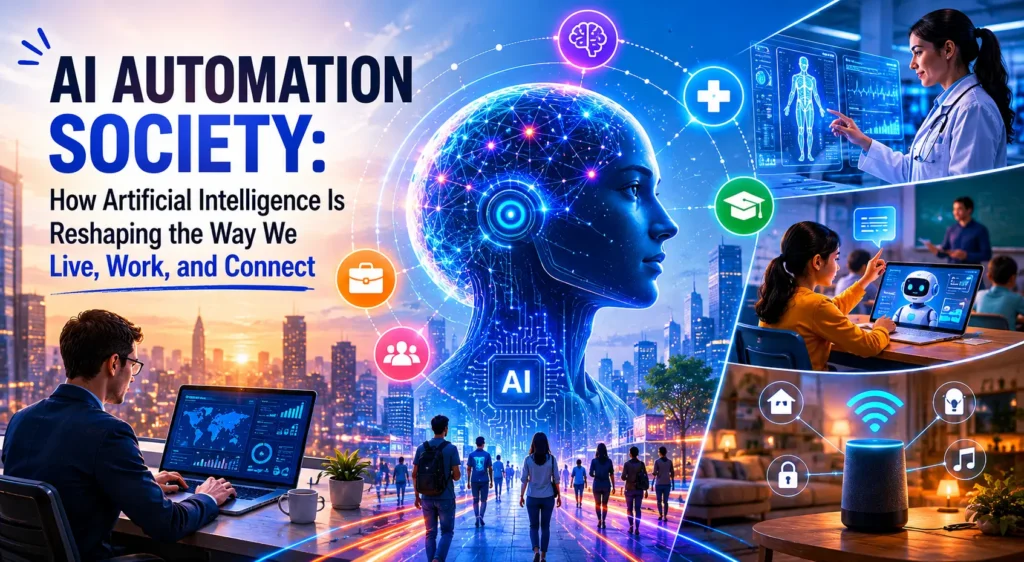
The AI Automation Society is quickly changing people’s lives and work style. AI is not just a futuristic solution that only the big technology companies are using — Now a day, AI is being integrate into customer support systems, healthcare diagnostics, financial services, online shopping, and even education platforms. The BCG Henderson Institute report, the 2026 report, projects that almost half to one-third of U.S. employment will be profoundly transformed by AI over the next 2-3 years. In the meantime, a study by McKinsey projects that AI could generate up to $4.4 trillion in value to the global economy every year. These are pictures of a significant shift in the societies of which we are a part, where automation is changing the way productivity, decisions are being made and how humans are collaborating in almost every sector in the world.
What Does “AI Automation Society” Really Mean?
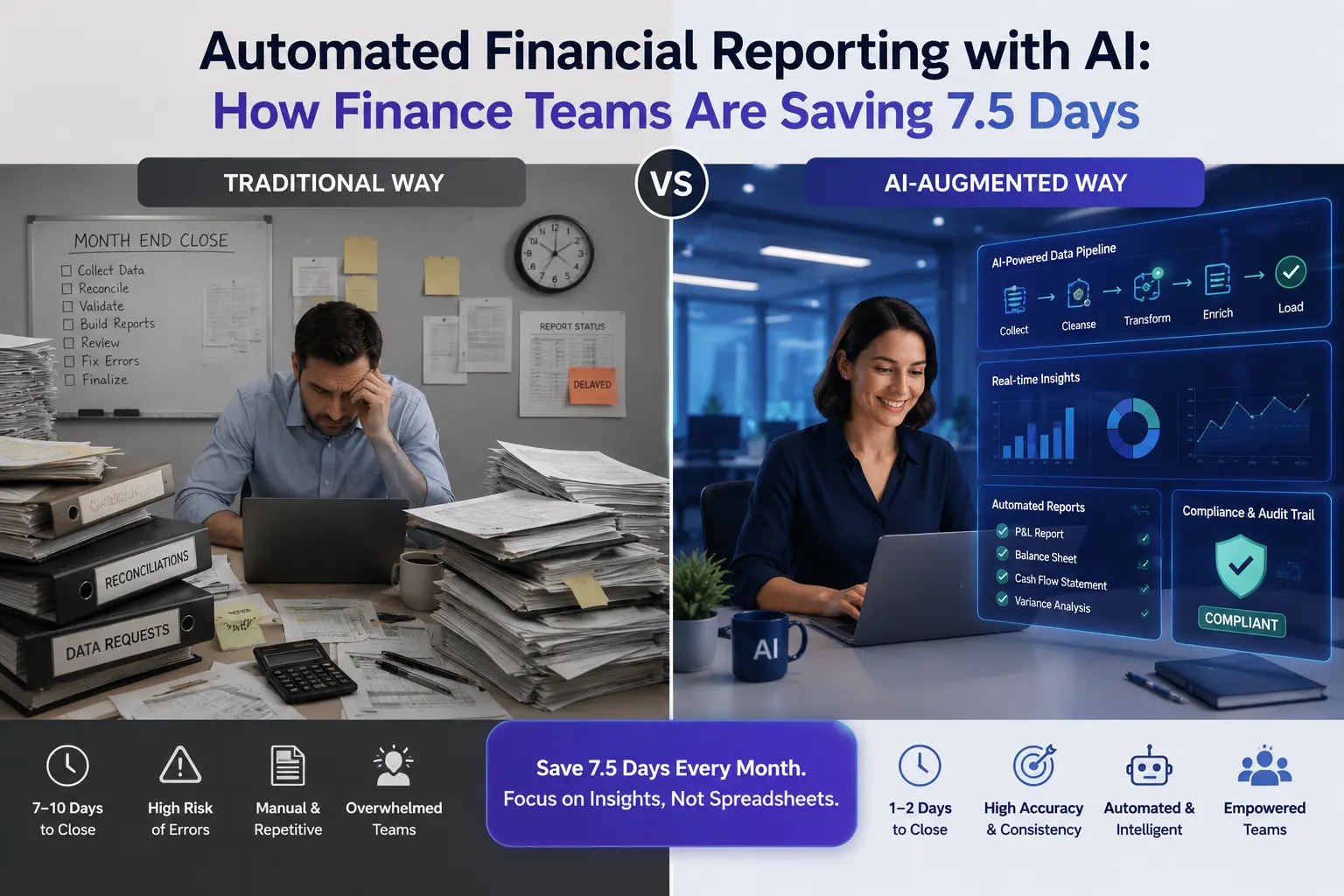
An AI Automation Society refers to a scenario in which AI and automation systems are deeply integrated into our daily lives, the operations of businesses, and the provision of public services. It’s not just about robots replacing factory workers. Nowadays, AI can identify sickness at an earlier stage, help financial institutions detect fraud, power recommendations for streaming platforms, and automate repetitive tasks in large organisations. According to PwC, AI could add 14% to the value of global GDP by 2030 and according to the World Economic Forum, millions of jobs will be shifted, not lost, by 2030. In this society, man is increasingly working with smart systems, thereby creating opportunities for innovation and challenges of ethics, privacy, adjusting to the workforce and the economic gap.
How AI Automation Is Changing the Job Market
The single most significant and current benefit of AI automation is in the workforce. Many people are wondering, simply, will AI take away jobs? But, as it happens, it’s not a simple as it sounds. Rather than displacing workers, AI is altering the way we do our jobs and often how relevant we are. The change is taking place at a faster rate than previous technology changes due to the fact that AI is already present in day-to-day applications in offices, hospitals, banks, and customer service systems.
The Reshaping, Not Replacing, of Work
Recent analysis from the BCG Henderson Institute (2026) shows that about 43% of U.S. jobs include tasks that can be at least 40% automate. This doesn’t necessarily mean mass unemployment, though. In reality, only between 10-15% of positions will be completely fill by current or new workers in the near future. The actual shift is “job redesign” in which AI performs repetitive and time-consuming tasks, while humans are left to exercise judgment, creativity and decision-making.
For instance, AI-powered tools are collaborating with software engineers to write code, identify bugs, and streamline testing processes. Rather than hiring engineers, this is enabling them to be more productive and reorient their role to system design and towards solving complex business problems. On the other hand, roles such as customer support are more vulnerable, as it is possible to handle a significant number of repetitive questions with very high accuracy using AI chat systems.
Who Is Most Vulnerable?
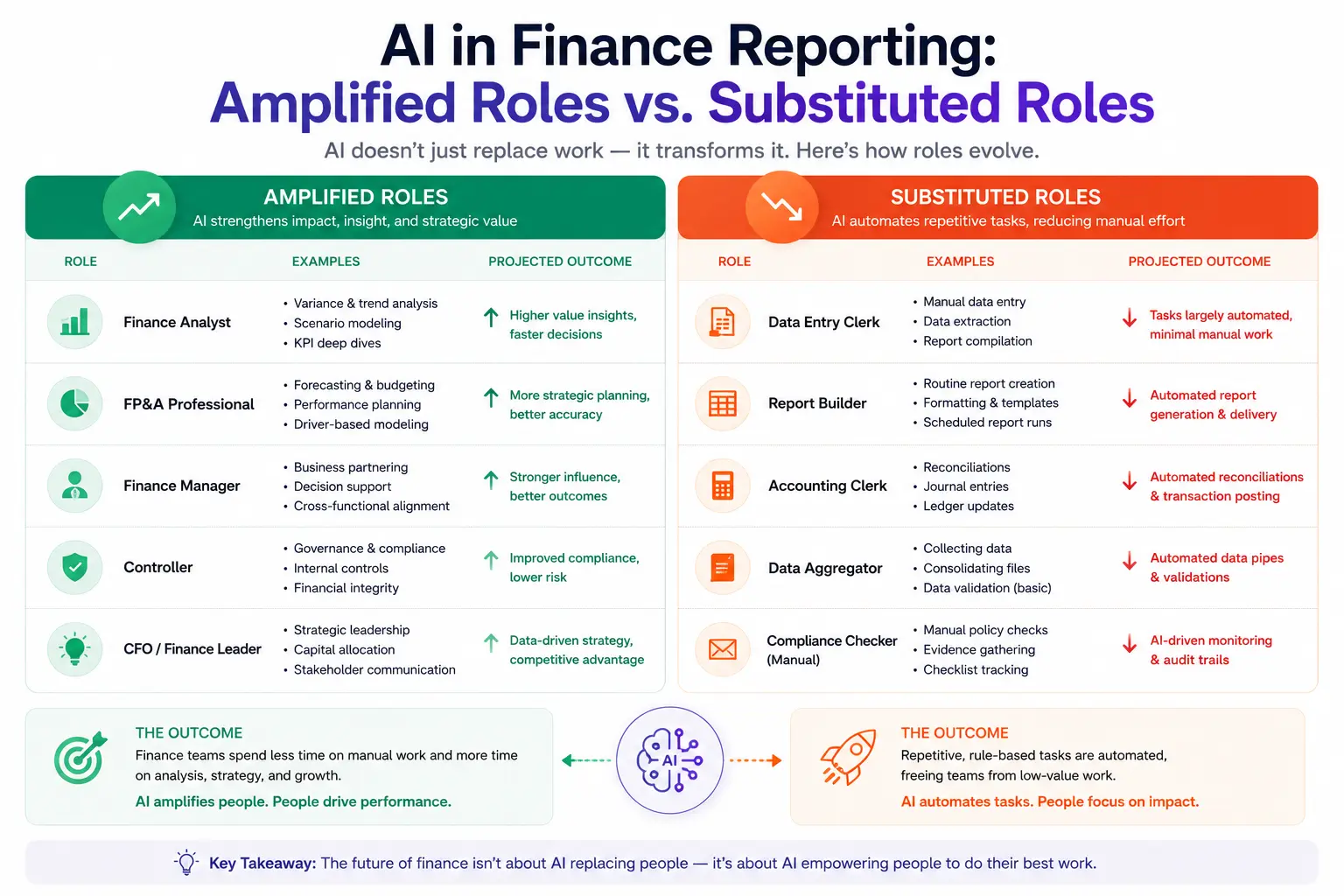
The entry level and routine occupations are currently most under pressure. Offices with entry-level jobs, like those requiring data entry, basic reporting and simple analysis, are seeing many of these jobs reduced due to the cost and speed of AI. It makes for a real headache for young professionals, as the “learning by doing” route is becoming increasingly limited.
At the same time, new roles are emerging. Forward-deployed AI engineers, systems integrators, and AI workflow managers are in high demand as organizations work to adapt intelligent systems to their specific needs. The net effect is not necessarily fewer jobs, but a dramatic shift in what those jobs require.
AI Automation in Healthcare, Education, and Daily Life
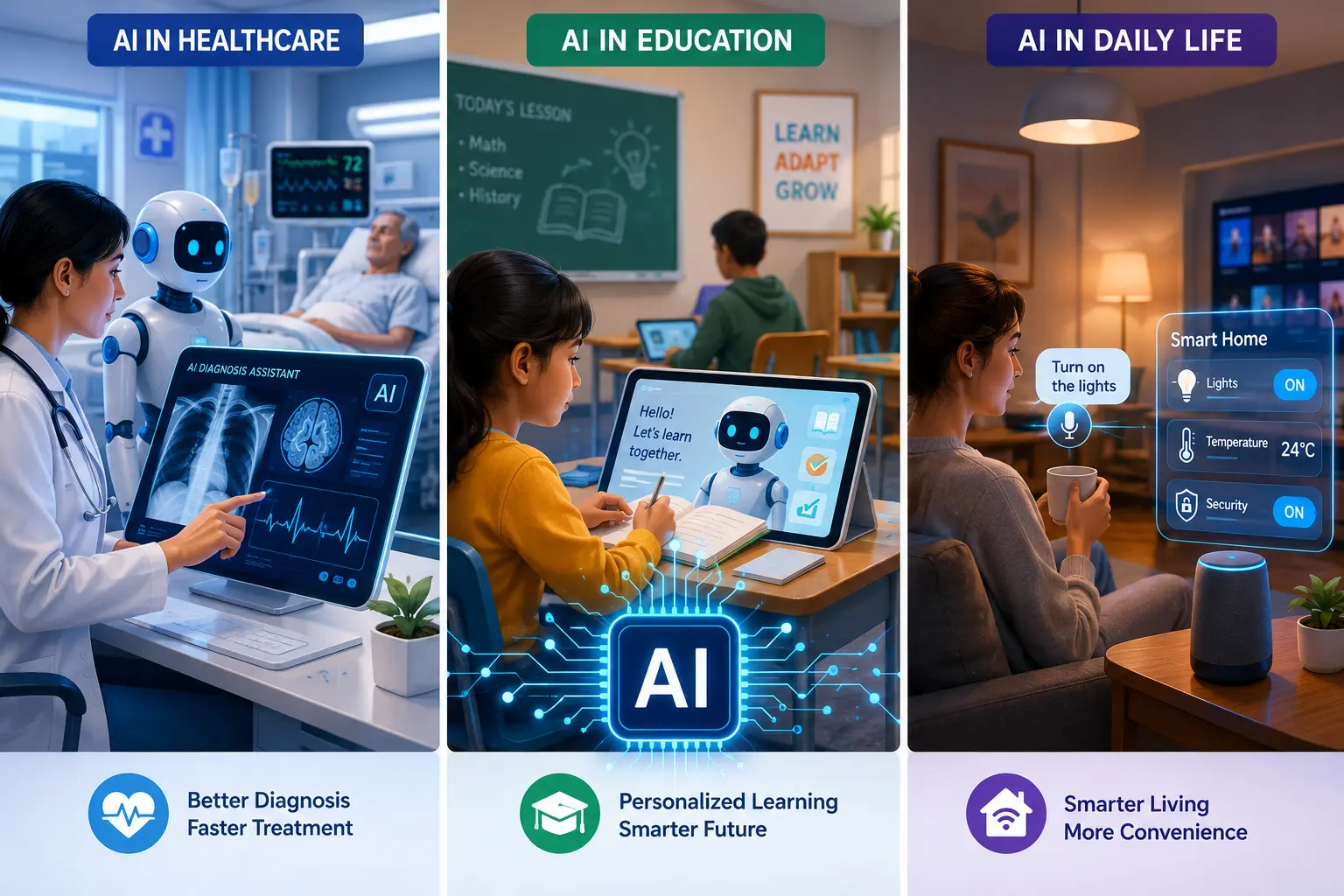
It is no longer a thing of fiction. AI automation is a reality in our daily lives today. It is increasing the efficiency of people in all kinds of institutions – from hospitals to schools, homes to businesses. It has brought many advantages, but the importance of human skills and personal connections is still paramount.
Healthcare
The health care sector is being transform and improve by AI in numerous positive ways. MIA is also being employed by doctors and medical professionals to enhance patient care and diagnosis.AI-driven tools are now helping doctors and medical practitioners to enhance patient care and diagnosis.
AI is also assisting with the rapid discovery of drugs. AI is being utilized by the pharmaceutical industry to discover new drugs faster than the traditional research process. This may save time and money and get patients treatments faster.
AI assistants are assisting doctors in healthcare settings, including hospitals and clinics, for note-taking, patient records, and appointment scheduling. AI is also employed by lab technicians to process test results and identify any irregularities swiftly.
Education
AI is also helping students all over the world to learn more easily and personalistically.
It is now being employed in many educational settings and online learning platforms to tailor lessons to students’ learning speed and performance. AI systems can provide additional practice and support for topics that a student is struggling with.
These tutors are enhancing writing, maths and language skills, providing immediate feedback to students. This way learning is more interactive and students can learn faster.
AI tools are also being adopted in medicine and professional learning to generate quizzes and scenarios for learning tasks and to highlight areas for further development.
Daily Life
AI automation has seamlessly integrated into the daily routine, often unnoticed by people.
Smart home technologies enable the efficient regulation of electricity consumption, and AI navigation tools recommend quicker routes and save time while on the road. Voice assistants can respond to inquiries, remind you of things and even take care of customer calls during off hours for businesses.
It also has an impact on how people use the internet, read and shop. A site or app’s recommendation system can provide suggestions to users of items, movies, or content they are likely to be interested in.
The Ethical Challenges of an AI-Automated Society
The researchers at Harvard have identified three key ethical issues with AI: privacy and surveillance, bias and discrimination. And the philosophical issue of human autonomy in a world dominated by machines.
Algorithmic Bias
Therefore, AI systems are only fair when their data is fair. If society has a prejudice in the hiring process, lending, criminal justice, or healthcare, for example, that is reflect in historical data, then the AI can perpetuate it at scale. This will call for a variety of training sets, strict auditing and openness in algorithm decision-making.
Privacy and Surveillance
AI’s success is built on data, and where that data is found is often in the day-to-day digital navigation of everyday individuals. The use of facial recognition, behavioral tracking and predictive policing has important consequences for technology’s ability to balance technological capabilities with civil liberties.
Accountability
When an AI system makes a mistake. A misdiagnosis, a wrongful denial of credit, a flawed legal recommendation — who is responsible? The lack of clear accountability frameworks remains one of the most pressing unresolved challenges in AI governance.
Step-by-Step Guide: How to Prepare for an AI-Automated Future
For personal and professional users, and for business leaders, the transition to AI automation demand proactive and thoughtful strategies. This is one practical way to achieve this, according to the advice of the experts.
Step 1 — Assess your exposure. Determine which tasks in your job or organization are repetitive, data-based, or are structured enough to be automated. The 40% automation threshold suggested by the BCG is a good reference point.
Step 2 — Invest in AI literacy. You don’t have to be a machine learning engineer, but you need to know what AI is, what it can and cannot do and how to use it effectively, as this is a basic part of your job!
Step 3 — Develop judgment-intensive skills. The skills that AI can’t replace are critical thinking, strategic decision making, creative problem solving, and interpersonal communication. Focus on these in your individual growth or employment skill development.
Step 4 — Redesign workflows, not just headcounts. The objective for any organization is to reimagine the way work is accomplished, not just to cut down on employees. Realize productivity benefits from growth, quality and increased services.
Step 5 — Build transition pathways. Design clarion redeployment and reskilling programs for people in substitution-exposed roles. Plans for transition should be a parallel process to the deployment of AI, not an add-on.
Step 6 — Stay informed and adaptive. AI’s capabilities are changing quickly. The limitations of automation that were valid then may not be valid in two years. A continuous process of learning is NOT an option.
Frequently Asked Questions (FAQs)
How is AI automation changing society? AI automation is transforming society by reshaping how people work, access healthcare, learn, and interact with technology. It is streamlining repetitive tasks across industries, enabling personalized services at scale, and creating new job categories while putting pressure on roles built around routine execution.
Will AI automation replace all human jobs? No. Research from the BCG Henderson Institute estimates that only 10% to 15% of U.S. jobs face elimination due to AI over the next five years, while 50% to 55% will be reshaped. Most roles will evolve rather than disappear, with AI augmenting human capabilities instead of fully replacing them.
What industries are most affected by AI automation? Industries with high volumes of structured, data-intensive tasks are most affected. These include financial services, customer support, legal research, content marketing, insurance, and IT support. Healthcare, education, and trades that require physical human presence are less exposed to disruption.
What are the ethical risks of AI automation? The primary ethical risks include algorithmic bias that amplifies existing social inequalities, erosion of privacy through mass data collection. And surveillance, lack of accountability. When AI systems make harmful decisions, and the potential for increased economic inequality if the benefits of automation are not broadly shared.
How can I prepare for an AI-automated future? Start by assessing which parts of your work are most automatable, then invest in AI literacy and judgment-intensive skills. Like critical thinking, creative problem-solving, and strategic communication. Stay current with AI developments in your field, and advocate for reskilling and transition support within your organization.